Everything You Need to Know About Virginia's Cannabis Cultivation License
Table of Contents
Overview
Virginia is set to launch adult-use cannabis market on July 1, 2027, subject to enacted legislation and final Virginia Cannabis Control Authority (CCA) regulations. If you’re planning to apply for a Virginia cannabis license, you need to understand:
- Which license type fits your business model
- Whether you qualify as an Impact Licensee (social equity)
- Whether a lottery will apply
- How ownership limits work
- What license caps exist through January 1, 2028
- When retail sales are expected to begin
Looking for detailed information on Virginia’s adut-use cannabis license applicatons? Checkout our full guide on Virginia’s cannabis license applications.
If you are ready to take the first step, contact us today and let’s begin preparing your Virginia Cannabis License application.
What does the Cannabis Cultivation License in Virginia allow?
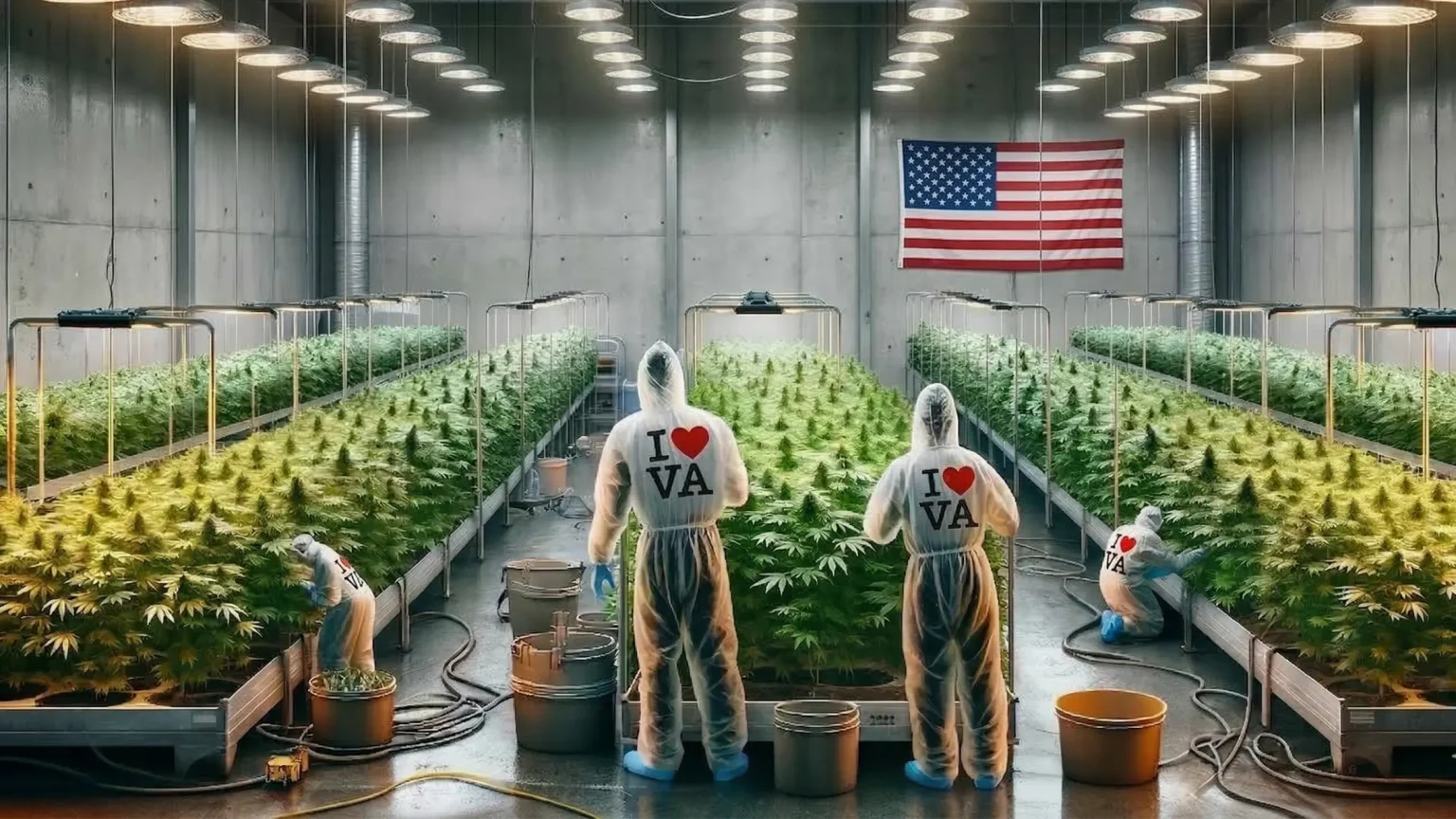
The Marijuana Cultivation Facility license authorizes the licensee to cultivate, label, and package marijuana. Because cultivators operate strictly B2B, you are permitted to:
- Purchase seeds and plants from other licensed cultivation facilities.
- B2B Sales and Transfers: Sell and transfer marijuana, immature plants, and seeds to retail stores, processors, transporters, and other cultivation facilities.
- Transportation: Transport marijuana, immature plants, and seeds directly from your licensed premises to another licensed marijuana establishment.
- B2B Sales Only: Cultivators are not authorized to sell immature plants and seeds directly to consumers. All consumer sales must go through a licensed retail store or microbusiness.
The 5 Canopy Tiers Explained
Virginia categorizes cultivation facilities by “canopy” size—the space used to produce flowering plants. Tiers I–IV have no limit on the number of licenses available, while Tier V is strictly capped.
- Tier I: Up to 5,000 sq. ft. (Indoor or Outdoor).
- Tier II: Up to 10,000 sq. ft. (Indoor or Outdoor).
- Tier III: Up to 15,000 sq. ft. (Indoor only).
- Tier IV: Up to 25,000 sq. ft. (Indoor only).
- Tier V: Up to 35,000 sq. ft. (Indoor only).
Note on Greenhouse Growing: Cultivation in a “secure agricultural greenhouse” is legally considered indoor cultivation, provided the structure is surrounded by a privacy fence that is no less than eight feet tall and is subject to monitored ingress and egress.
Key Restrictions & Market Caps
- The Tier V Scarcity: To prevent market dominance, only five (5) Tier V licenses will be issued statewide prior to January 1, 2028.
- Ownership Limits: Generally, no person or entity may hold an interest in more than five total marijuana licenses (excluding transporter licenses) and no more than one Tier V cultivation license.
- Labor Peace Agreement (LPA): All license applicants must enter into, maintain, and abide by a labor peace agreement with a bona fide labor organization as an ongoing material condition of licensure.
- Location Rules: Cultivators are not subject to the state’s strict 1,000-foot buffer zones or residential bans, which only apply to retailers and microbusinesses. However, facilities must conform to the requirements of the local governing body with respect to sanitation, health, construction, and local zoning ordinances.
- Land Restrictions: Only one license authorizing outdoor cultivation may be issued per given parcel of land, including contiguous parcels under common ownership or control.
Priority Pathways for Existing Operators
Existing legal operators have specific “early entry” pathways to secure cultivation privileges.
- Medical Dual-Use Pathway: Existing pharmaceutical processors may apply for “dual-use” privileges (medical and adult-use) for a $10 million fee. This allows an indoor canopy of up to 70,000 square feet.
Application & Deficiency Rules
Virginia utilizes a strict 10-calendar-day deficiency notice system. If an application is submitted with missing information or unpaid fees, the applicant has exactly 10 days to correct it; failure to do so results in immediate rejection.
How CannDelta Helps You Secure a Cannabis Cultivator License in Virginia
Growing cannabis is science; growing it legally is a regulatory marathon. CannDelta provides the specialized oversight needed to move from a site plan to a successful harvest:
- Facility Feasibility & Design: We help you maximize your tier-specific canopy through high-efficiency HVAC/lighting layouts and compliant vertical racking (ensuring all layered surface areas are properly calculated within your statutory limits).
- GACP/GMP Compliance: We implement Good Agricultural and Collection Practices to ensure your flower passes the state’s mandatory independent laboratory testing for mold, pesticides, and heavy metals.
- Zoning & Land Use: We verify your site meets all local municipality zoning ordinances and structural requirements for secure agricultural greenhouses.
- SOP Development: We draft comprehensive manuals for integrated pest management (IPM), nutrient tracking, the state’s mandatory seed-to-sale tracking system, and strict waste destruction protocols.